
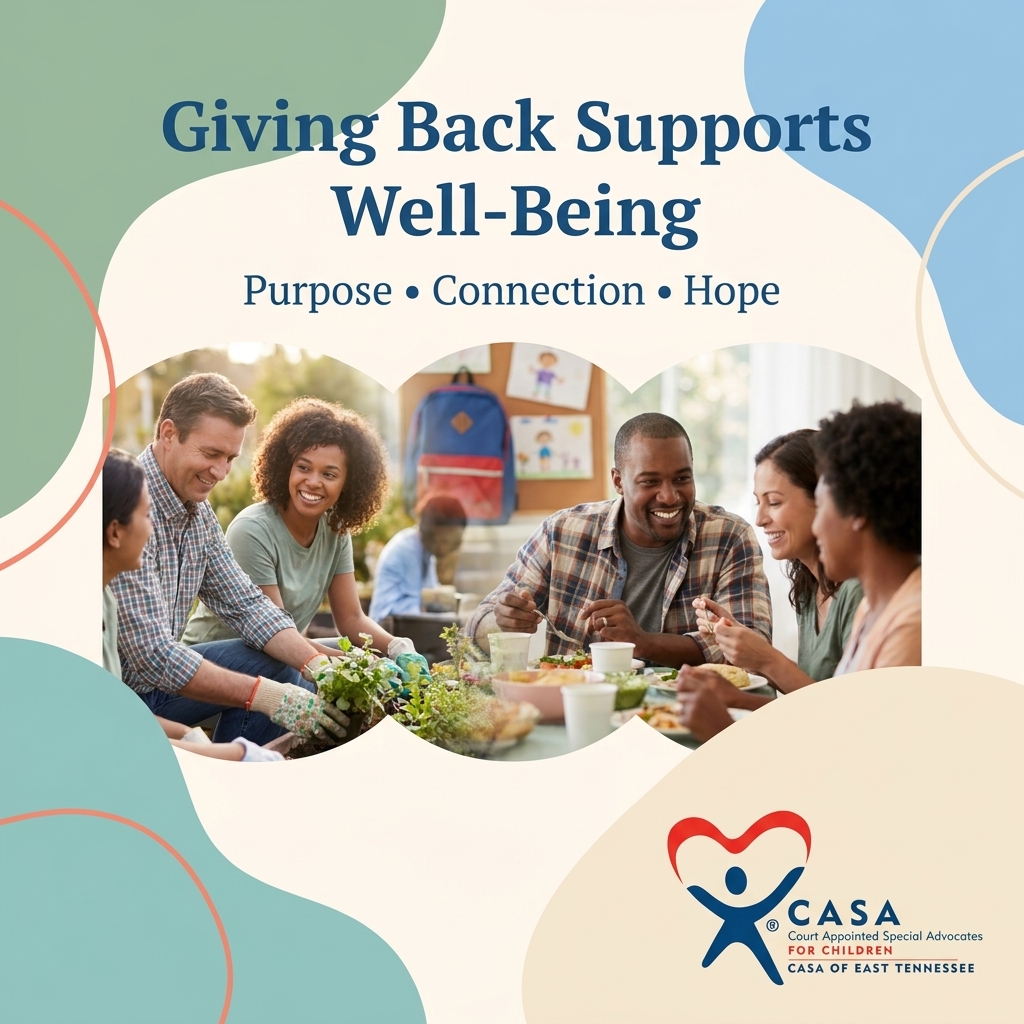
The Health and Heart Benefits of Giving Back
Giving back can change more than a community, it can change the way you feel each day. Whether you spend time supporting a neighbor, donate to a meaningful cause, or become a volunteer advocate for a child, acts of service can strengthen emotional well-being while encouraging healthier routines and deeper human connection.
A Sense of Purpose That Lasts
Life can feel busy, uncertain, or disconnected at times. Volunteering offers a meaningful way to focus energy on something larger than yourself. For many people, knowing their time and voice can help a child feel seen, heard, and supported creates a powerful sense of purpose.
At CASA of East Tennessee, trained Court Appointed Special Advocates stand beside children who have experienced abuse or neglect as their cases move through juvenile court. A volunteer may be one consistent adult in a child’s life during a difficult period, advocating for the services and stability that support a safe, permanent, loving home.
That purpose is personal. Volunteers often describe the experience not as simply completing a task, but as becoming part of a child’s story of safety, healing, and hope.
Giving Back Can Ease Everyday Stress
Stress affects both the mind and body. While volunteering cannot remove every pressure in life, taking constructive action can help people shift their attention away from daily worries and toward a meaningful goal. Helping others can create moments of perspective, gratitude, and accomplishment.
Research on volunteering and well-being has repeatedly found connections between service, lower stress, and improved self-reported health. The benefit is not about doing more or overextending yourself. It comes from finding a role that feels manageable and meaningful, whether that means advocating for a child, attending a community event, or supporting an East Tennessee nonprofit through a donation.
Active Service Supports Physical Well-Being
Some volunteer opportunities naturally add movement to the day. Community cleanups, event support, organizing donation drives, and participating in neighborhood projects can get people out of the house and engaged. Even volunteer roles that are less physically active can support healthier habits by creating structure, encouraging regular social interaction, and giving people a reason to stay involved in their community.
A volunteer advocate’s work looks different from hands-on event volunteering, but it can still foster a sense of routine and engagement. CASA of East Tennessee provides training and support so advocates can better understand child welfare, communicate with the people involved in a case, and make informed recommendations centered on a child’s best interests.
Connection Helps Counter Isolation
One of the most meaningful benefits of giving back is connection. Volunteering brings people together around a shared purpose, often creating relationships that might not have formed otherwise. It can be especially valuable for people who are new to Knoxville, entering a new stage of life, or looking for a more meaningful way to meet others.
When people serve alongside one another, they share conversations, challenges, and small victories. Those moments can build belonging. They also remind us that community care is not someone else’s responsibility; it is something we can all help create.
For children in foster care and in the juvenile court system, connection matters in an even more immediate way. A CASA volunteer helps ensure a child’s needs, experiences, and best interests remain at the center of important decisions.
Service Builds Empathy and Understanding
Giving back invites us to listen more closely. It helps us recognize experiences beyond our own and better understand the barriers others may face. In child advocacy, that empathy must be paired with patience, training, and a commitment to the child’s well-being.
Court Appointed Special Advocates do not replace families, attorneys, or case professionals. Instead, they provide focused, independent advocacy for children who have experienced abuse or neglect. By learning about a child’s circumstances and speaking up for their best interests, advocates help the court make decisions with a fuller picture of what the child needs.
This work can be emotionally meaningful because it transforms compassion into action. Rather than feeling helpless when confronting a difficult issue, volunteers can contribute to practical support that makes a difference.
Small Actions Can Strengthen a Community
A stronger community is built through many individual choices. Someone may choose to donate to children’s programs, attend a local awareness event, share information about volunteer opportunities, or take the next step toward becoming a CASA volunteer. Each action can help expand the network of care around children and families.
CASA of East Tennessee is proud to serve children across East Tennessee from our Knoxville community. Our work depends on people who believe every child deserves safety, stability, and the chance to thrive. When volunteers and supporters come together, they help make sure children are not overlooked in the child welfare system.
How to Find a Meaningful Way to Help
The best volunteer opportunity is one that fits your skills, availability, and values. Start by thinking about the causes that matter most to you. If children’s well-being and juvenile court advocacy speak to you, learning more about becoming a CASA volunteer may be a meaningful next step.
You can also support the mission by donating, attending a community program, encouraging a friend to get involved, or sharing CASA of East Tennessee’s work with people in your network. Meaningful service does not always look the same, and every contribution can help move a child closer to the support they deserve.
FAQ
What does a CASA volunteer do?
A CASA volunteer is a trained Court Appointed Special Advocate who represents a child’s best interests in juvenile court cases involving abuse or neglect. The advocate gathers information, builds an understanding of the child’s needs, and provides recommendations to the court.
Can volunteering improve emotional well-being?
Many people find that volunteering increases their sense of purpose, connection, and fulfillment. Being part of a meaningful effort can also help reduce feelings of isolation and provide a constructive outlet during stressful times.
Do I need prior child welfare experience to volunteer?
No. CASA of East Tennessee provides training and ongoing support for volunteers. What matters most is a willingness to learn, listen, and advocate thoughtfully for a child’s best interests.
How can I support CASA of East Tennessee if I cannot volunteer?
You can make an important difference by donating to support children, participating in community initiatives, sharing information about our mission, or encouraging others to explore volunteer opportunities.
Why is community support important for children in foster care?
Children in foster care benefit when caring adults and community organizations work together to support their safety, stability, and well-being. Dedicated advocacy can help ensure their voices and needs are considered as decisions are made about their futures.
Giving back benefits the people receiving support, but it can also bring greater purpose, connection, and well-being to those who serve. By getting involved with CASA of East Tennessee, supporting child advocacy, or encouraging others to act, you can help strengthen our community while making a lasting difference for children who need a caring voice.